.svg)


.svg)
.svg)
.svg)
Coding has entered a new era of abundance. Millions of people from developers to non-technical users are harnessing the power of AI with tools like Claude Code and Cursor to build applications at an unprecedented pace. But applications don’t run themselves. Behind every application lies infrastructure to manage data, users, and workflows so everything runs smoothly as it scales. The AI software boom needs a backend built for speed, scale, and developer love and that backend is Supabase. Supabase removes the heavy lifting to spin up a backend, making it easier for builders to ship production-ready applications faster. The excellent developer experience that made Supabase wildly popular since its inception has naturally led it to become the backend of choice for AI-powered coding tools and AI native development workflows.
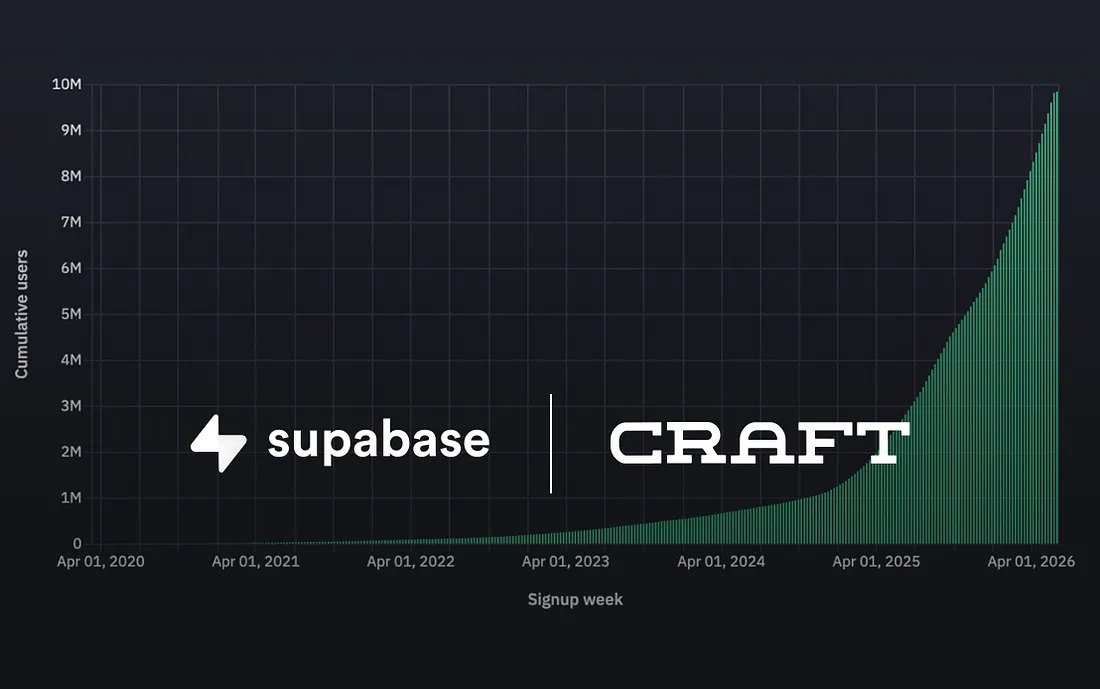
Today, nearly 10 million developers use Supabase, almost a 4x increase from just a year ago. That number continues to grow as builders join the community and contribute to the Supabase platform. Even as Supabase has scaled to millions of developers, the company has preserved what made it special from the start: an obsessive focus on developers. To this day, co-founders Paul and Ant remain actively engaged with the community, regularly answering questions and responding to comments on X and Hacker News (no, it’s not an AI bot).

AI has unleashed an explosion in application development. The next frontier is scale. As AI-built applications move from prototypes to production, Supabase will need to support some of the largest database workloads in the world. That is why we are so excited about Multigres. Multigres is a horizontally scalable Postgres architecture designed for enterprise-grade and massive scale database workloads. To lead its development, last year Supabase brought on Sugu Sougoumarane, one of the creators of Vitess at YouTube. Just as Vitess helped MySQL power some of the world’s largest applications, Multigres has the potential to do the same for Postgres. It will enable developers building on Supabase to scale from millions to billions of users, and eventually to the trillions of AI agents that will define the next era of software.
Since co-leading Supabase’s Series C in 2024, Craft has invested in every round — Series D, E and now series F. Even though the phrase is “doubling down,” we’re actually “quadrupling down.” With each round, our conviction has only grown and we’re deeply grateful to be working with this incredible team. This Series F financing represents Craft’s largest investment in Supabase to date and we’re just getting going. Supabase has firmly established itself as one of the most important companies in AI-native software, setting the standard for how the next generation of applications are built, shipped, and scaled. Congratulations to the incredible team and people at Supabase for this incredible milestone. We couldn’t be more excited and proud to be on the journey with such a legendary team and company.

.png)